
Central Bank Museum of Costa Rica
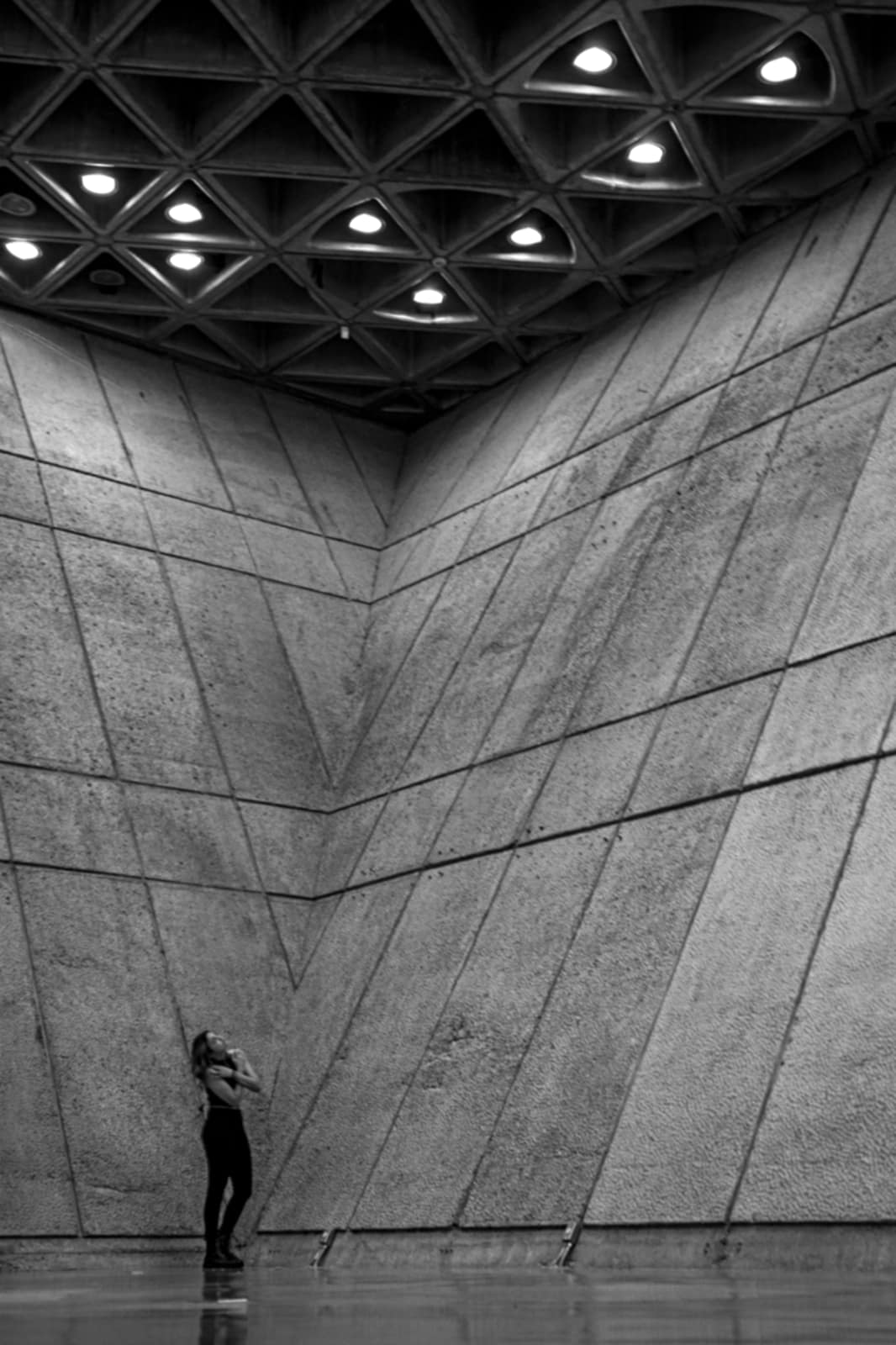
Located beneath the Plaza de la Cultura, in the heart of San José. More than just a traditional museum, it is an underground journey through the country's history, art, and economy.
Feeling Small: The Space and Perspective
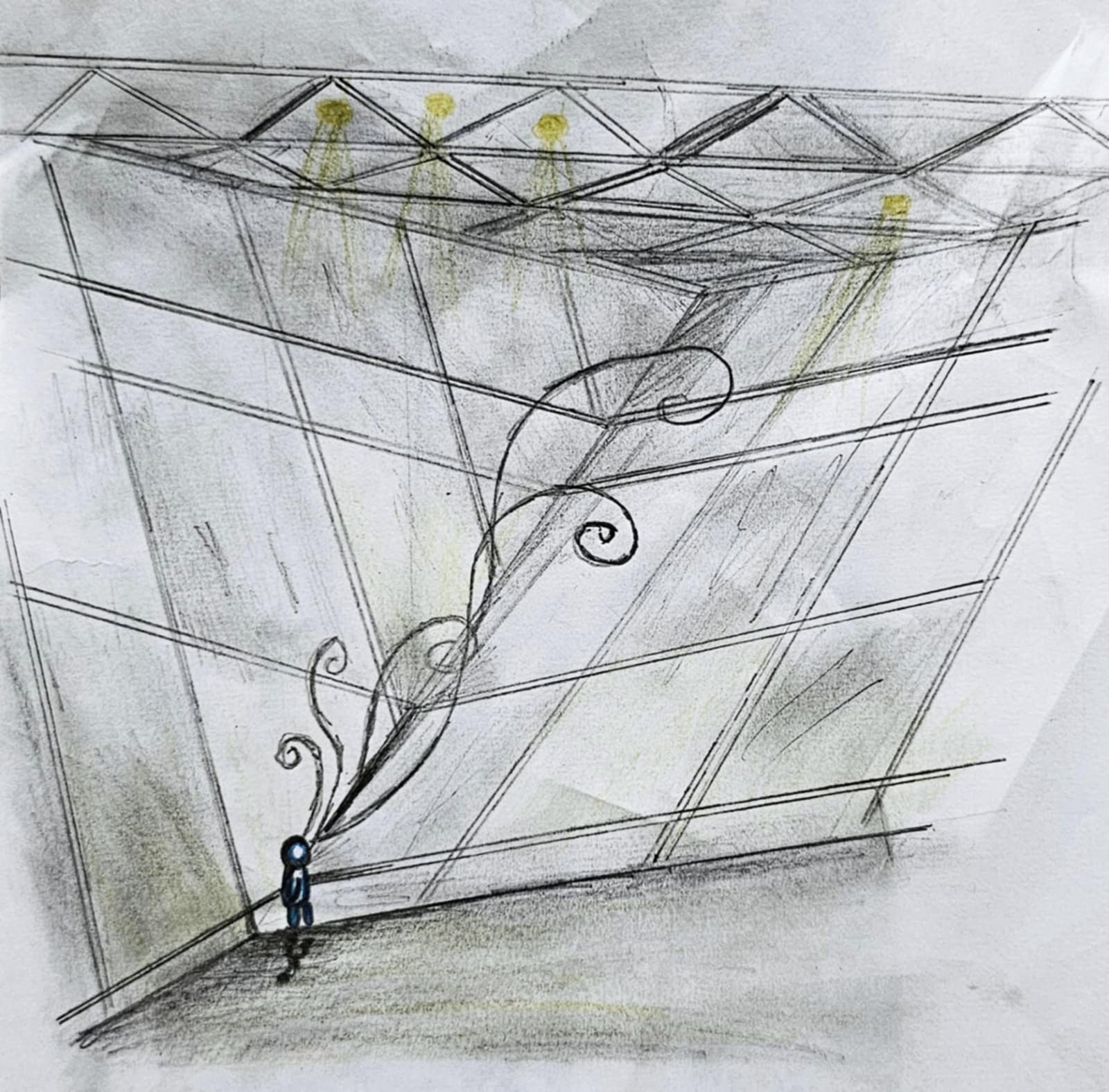
It spans just three levels underground. Compared to conventional buildings, this may seem modest, but the sensation it conveys is distinct: the perspective makes you feel small. That sense of smallness was one of the emotions I sought to capture in black and white. Entering a space built to safeguard what is valuable is, in a way, traversing layers of history and becoming a part of them.
Noticing the Details
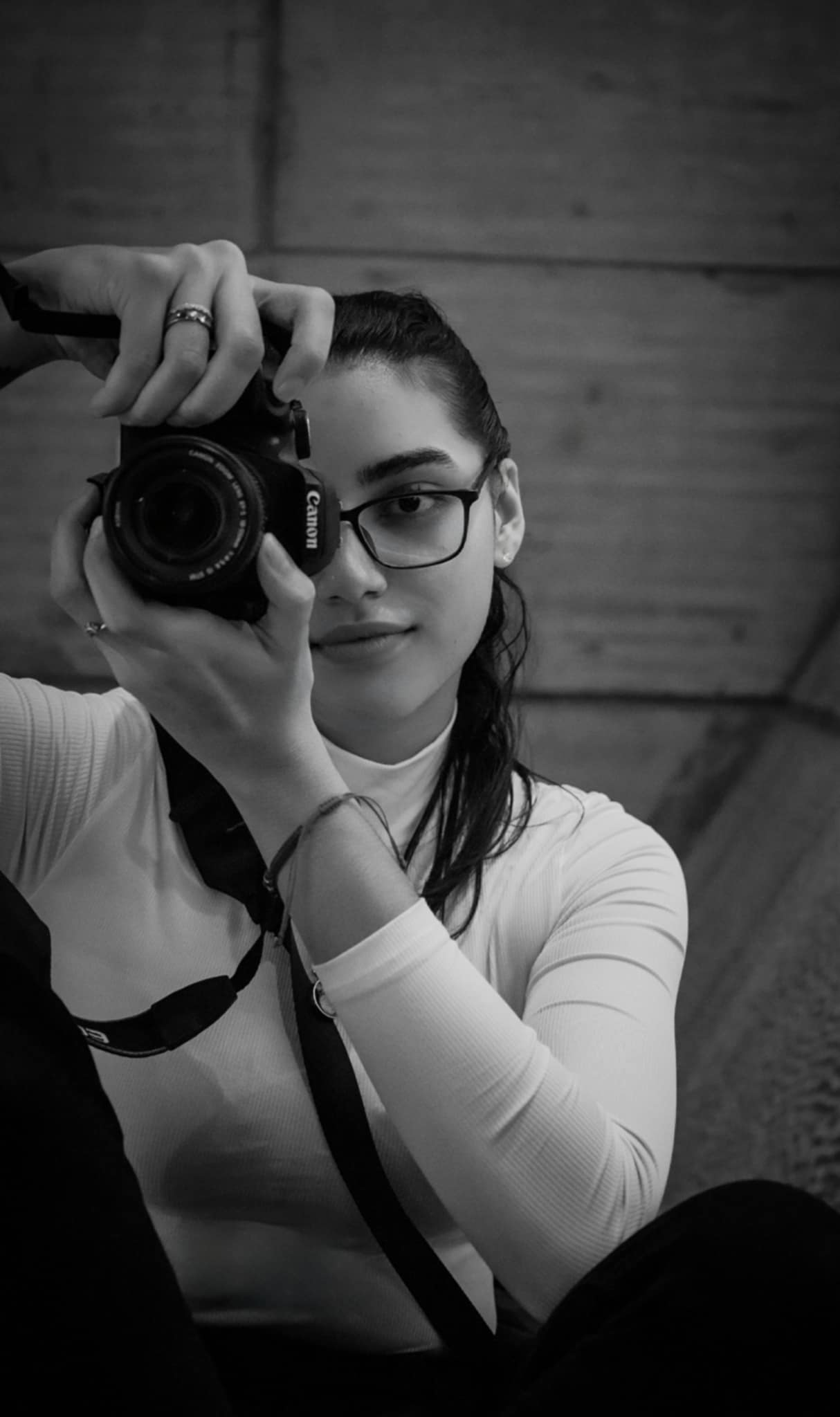
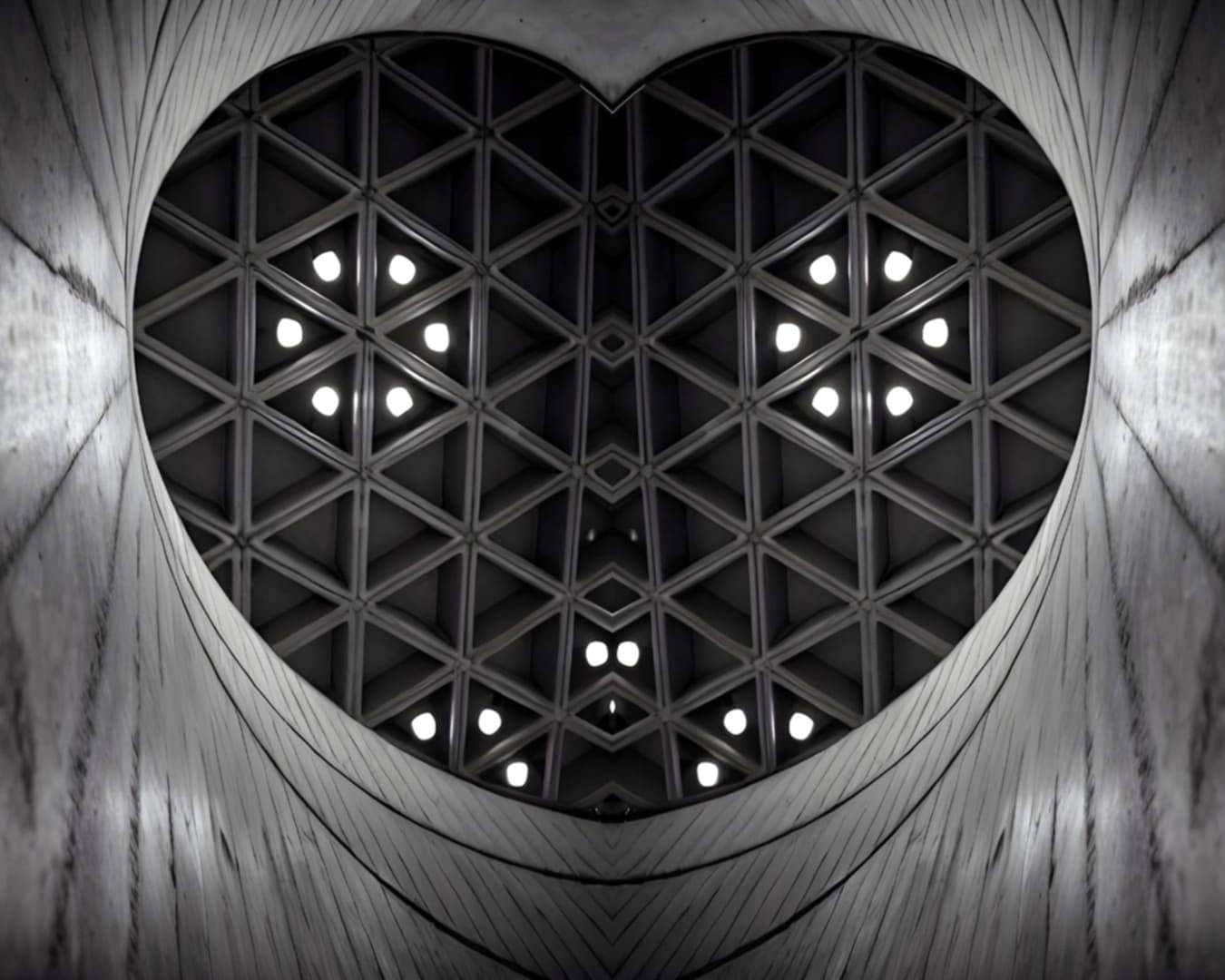
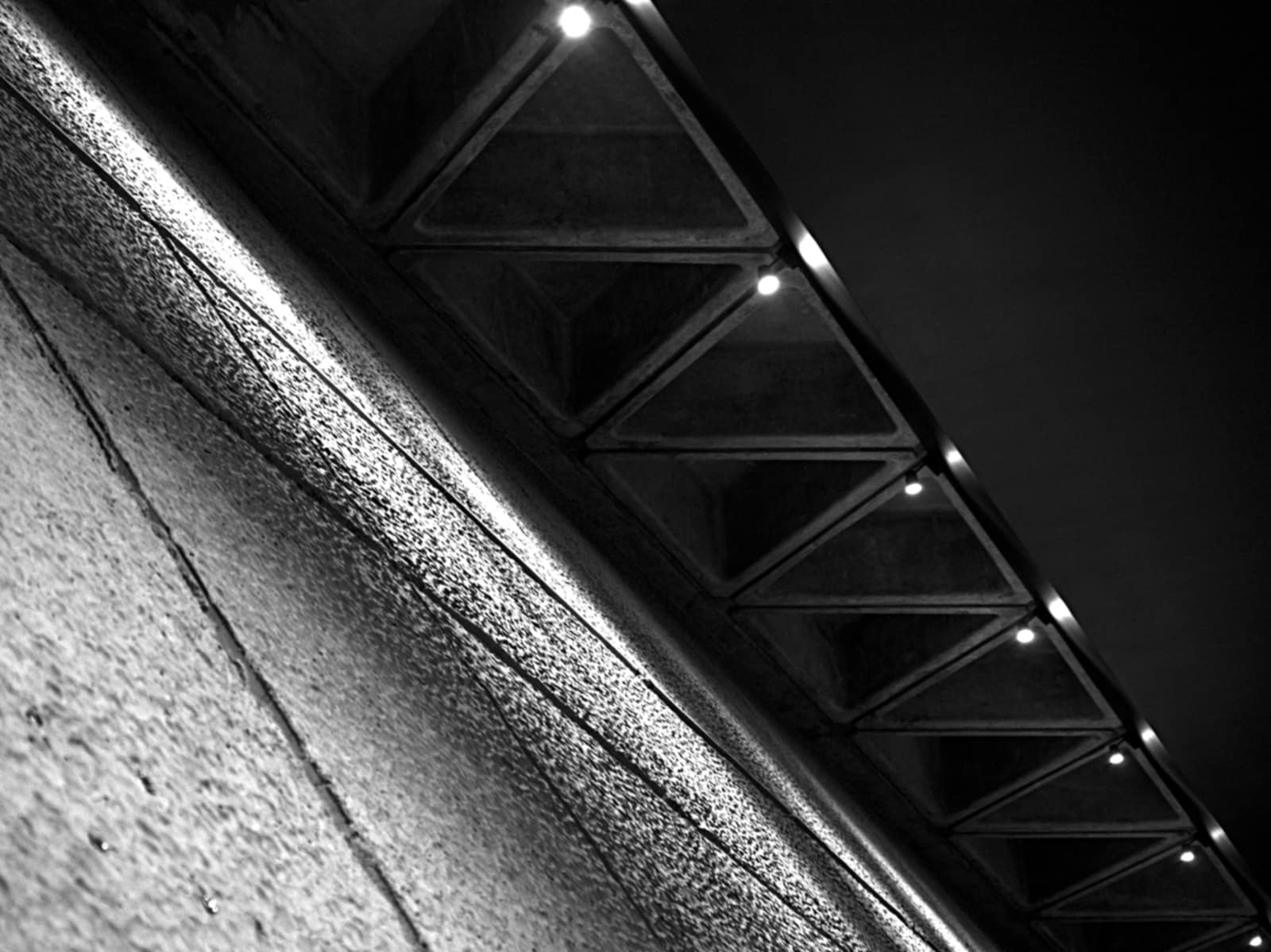
As I moved through the space, my attention gradually shifted toward the details—and toward those areas that have since become instantly recognizable online. The museum’s ceiling, with its precise and repetitive lines, was one of the first elements that stopped me in my tracks. From that point on, I allowed myself to engage in creative editing, utilizing the geometry of the space to construct new interpretations and move beyond a merely documentary gaze
Patterns and Creativity
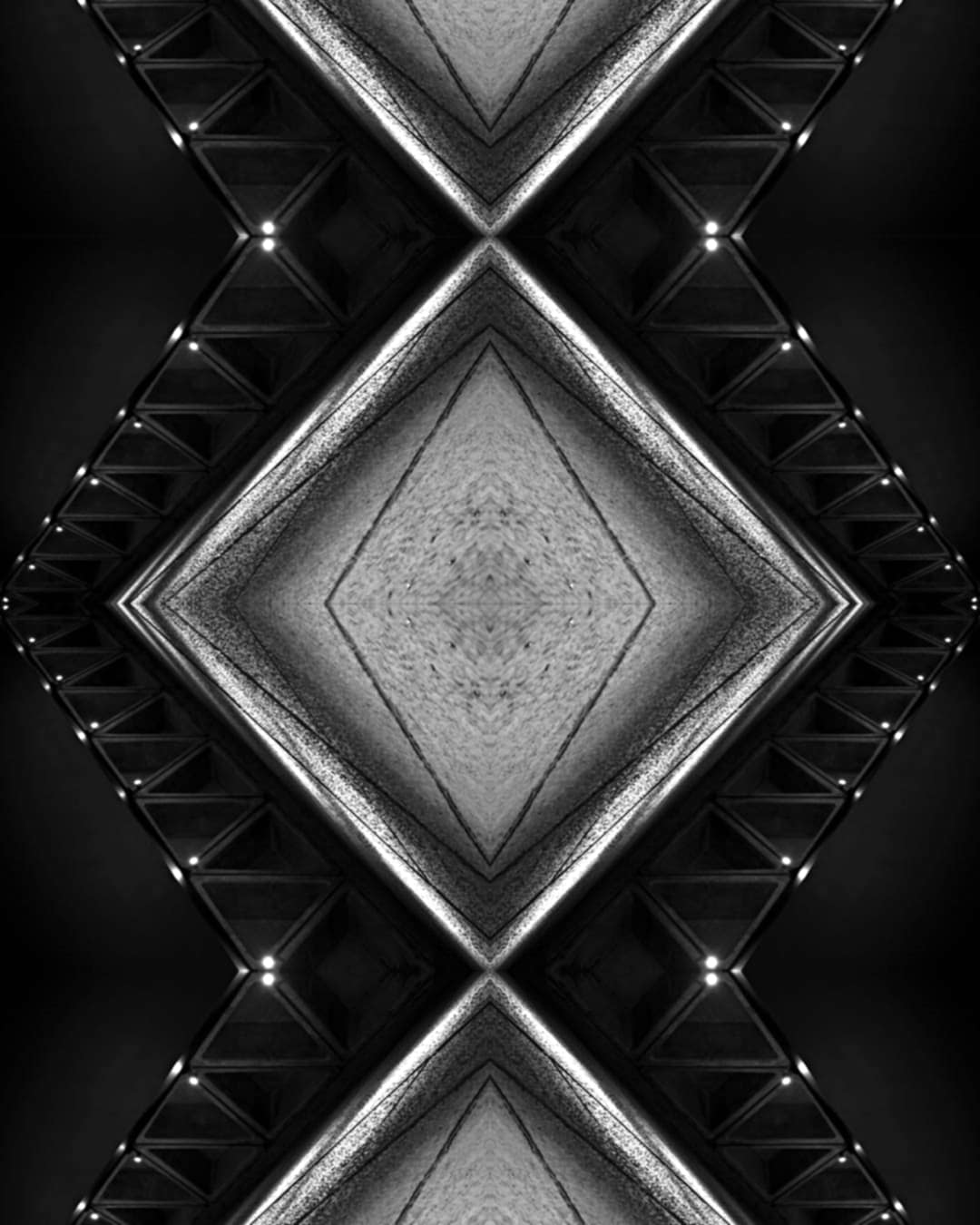
The initial image of the heart emerged from an ascending staircase: a single photograph, duplicated and mirror-inverted. Using just a single shot of a wall, I constructed a repeating triangular pattern that forms perfect diamonds.
Seeing the museum as Form
Everything stems from the same gesture: observing intently, reinterpreting, and reading the museum as a form. In the course of that process, I began to perceive the space as an inverted pyramid, a place where the structure itself carries just as much weight as the treasures it safeguards.
Architecture as Experience
Viewing the museum through the lens of its architecture allowed me to connect with the place on a deeper level. I came to understand that it is not merely the chest that holds the treasure, but the very space that sustains it. It is not solely about the gold; it is about the architecture that protects it, contains it, and transforms it into an experience.
Expanding the Visual Language
I know that, as a museum, its perceived value typically centers on its display cases, its artifacts, and its stones steeped in history. Yet, it was the space itself—the architecture, that enabled me to expand the visual language of this series. Exploring its structure, its lines, and its repetitions led me to tell a different story—one that depends not solely on the object itself, but on the way the place is inhabited and observed.
Reflection: Seeing the Unnoticed
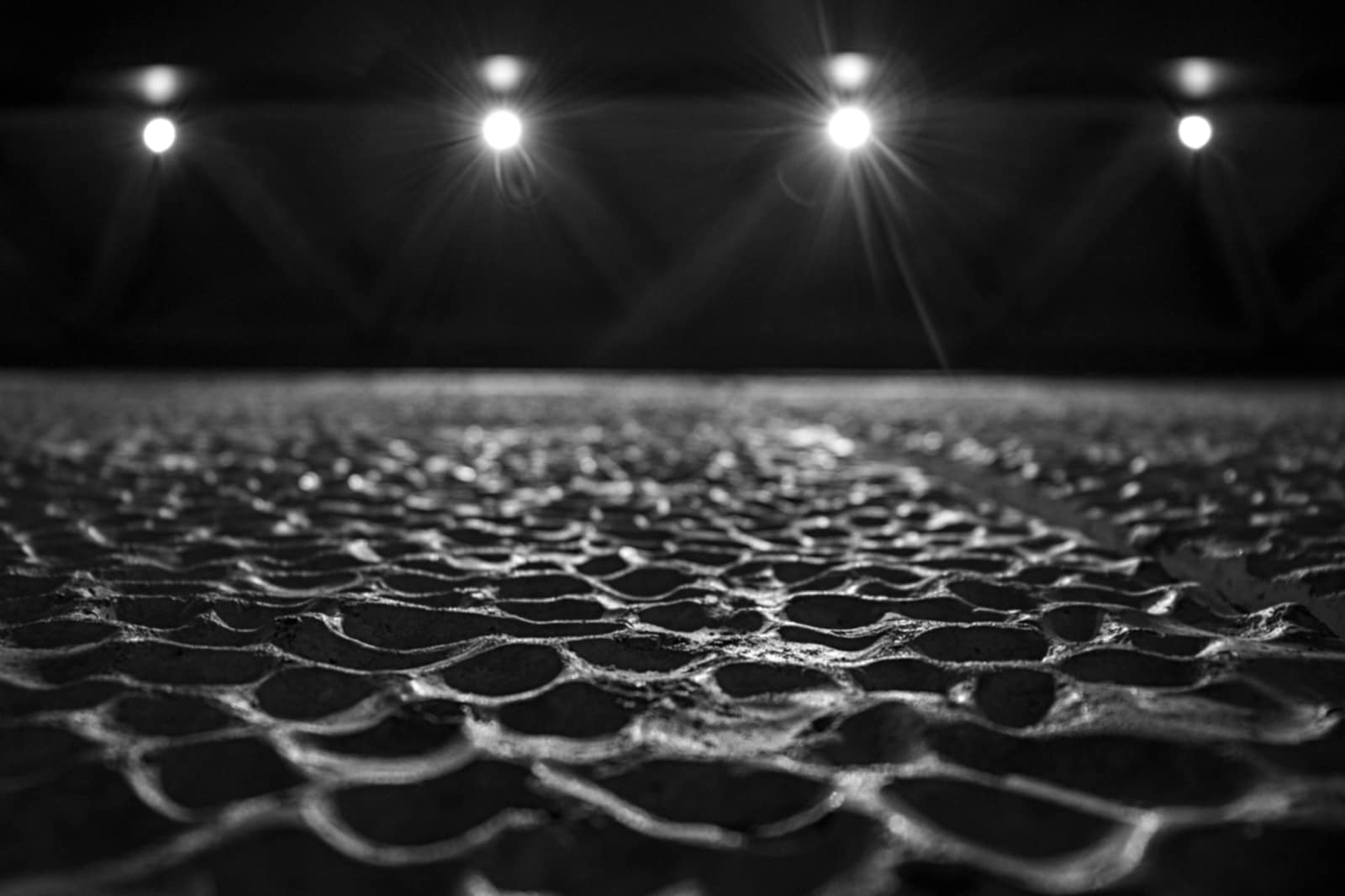
This exercise in looking with calm left me with a final reflection: many of the places we visit go unnoticed. Museums, plazas, streets, cities—even nature itself. The way we see and recount a place is always constructed from its details. And it is within those details that, so often, its true value is revealed.